

Donostia
Donostia
An elegant Basque beach city famed for its golden crescent bay, world-class food and more Michelin stars per head than almost anywhere on earth.
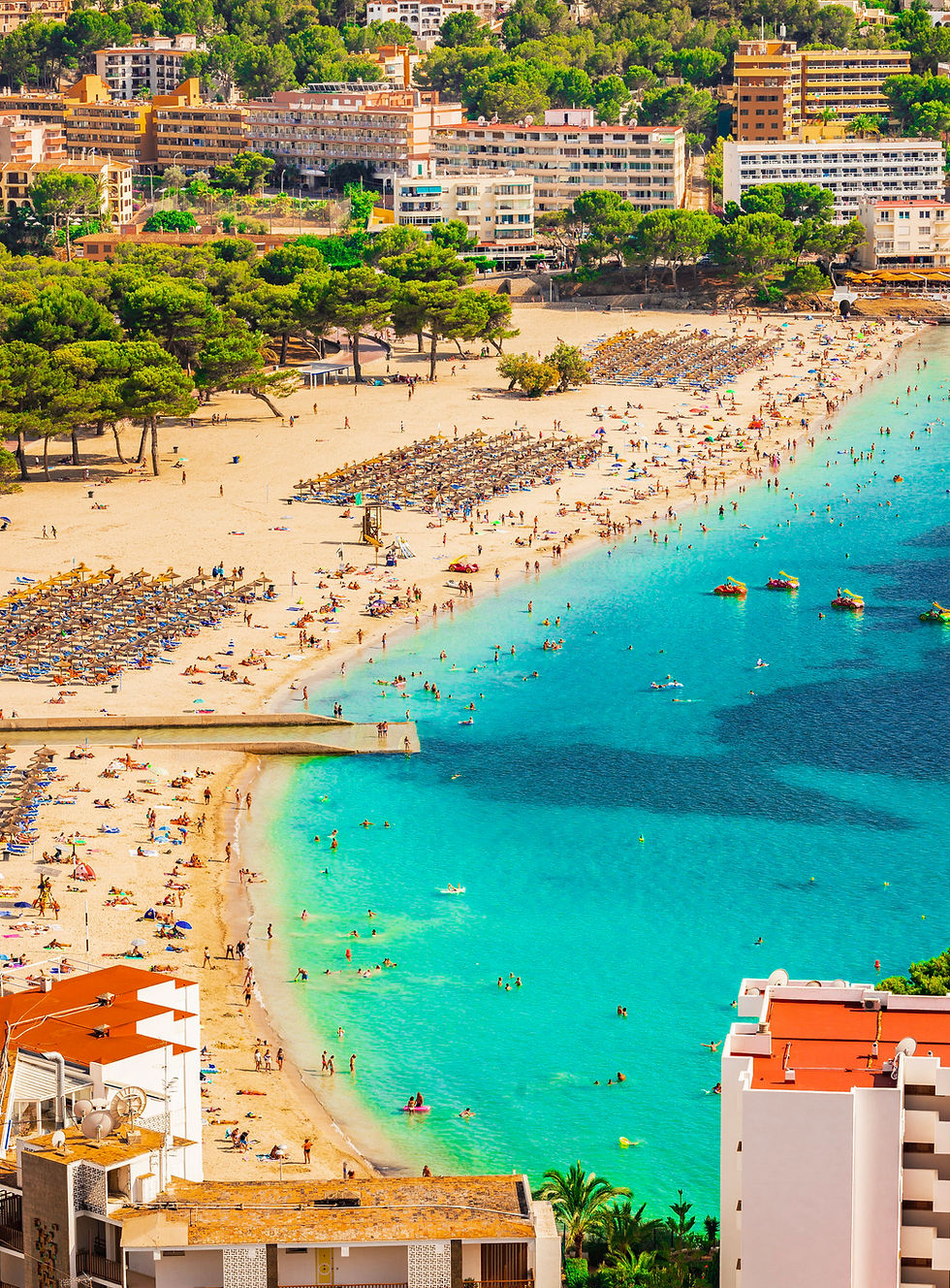
San Sebastian sits on a scalloped bay on Spain's northern Basque coast, close to the French border. It is one of the country's most elegant cities, built around the golden curve of La Concha beach and known the world over for its food. With more Michelin stars per head than almost anywhere, plus countless pintxo bars in its old town, it is a true foodie destination. Refined but relaxed, it pairs city style with seaside ease.
What San Sebastian is known for
San Sebastian is known first for its food. Few places on earth pack in so many top restaurants for their size, with several holding three Michelin stars, yet eating here is just as much about the pintxo bars of the old town, where you graze small plates standing at the counter. For many visitors, the city is a pilgrimage for the table. It is also one of Spain's most beautiful cities. The bay of La Concha is a perfect golden crescent, framed by green hills and lined by a grand promenade, with elegant Belle Epoque architecture from the days when Spanish royalty summered here. You can climb Monte Urgull or Monte Igueldo for views over the whole sweep of the bay. Beyond food and beaches, San Sebastian has a lively cultural life, a famous film festival each September and a strong Basque identity. Compact, walkable and stylish without being stuffy, it is a place to eat well, swim and slow down.


5WTP
Experience Name
Description

5WTP
Region name
Description
5WTP
Region name
Description
5WTP
Region name
Description
5WTP
Region name
Description
5WTP
Region name
Description
Experiences and things to do in San Sebastian
Start on La Concha, one of Europe's finest city beaches, with a walk along its grand promenade. For the best view, climb Monte Igueldo or Monte Urgull to look back over the bay. The real highlight, though, is eating: work through the pintxo bars of the old town, the Parte Vieja, trying one or two plates at each. If you want the sea, surfers head to Zurriola beach, while culture fans can time a visit for September's film festival. Finish with a slice of the famous burnt Basque cheesecake. Whichever way you want to play, San Sebastian has it.
Where to stay in San Sebastian
Where you base yourself shapes the trip. The Parte Vieja, the old town, is the heart of the pintxo scene, lively day and night. The Centro, the elegant central district, sits between the old town and La Concha beach, handy for everything. Gros, across the river, is a younger, relaxed area near the surf beach at Zurriola, with its own good bars.
Food and drink in San Sebastian
San Sebastian is one of the world's great food cities. At the simple end, graze the pintxo bars of the old town, trying gilda skewers, grilled prawns and slabs of tortilla. At the other, book one of its many Michelin-starred restaurants. Local specialities include grilled turbot and the burnt Basque cheesecake born here. Wash it down with local txakoli or cider.
5WTP
Restaurant Name
Description
Airport Code
Region name
Description
Airport Code
Region name
Description
00
00
00
/
Feels like
00
Weather today in San Sebastian
00 km/h NE
Wind Description
UV 0
UV Description
0 mm
Rain Description
Weather summary text
2 Day Forecast
Forecast
0% Rain
00
/
00
°
Day
Forecast
0% Rain
00
/
00
°
Day
Condition
00:00
00:00
Best time to visit San Sebastian
San Sebastian sits on the green, wetter northern coast, so its weather is milder and less reliable than southern Spain. The best times to visit are summer (June to September), when the beaches come alive, and the shoulder months of May and late September. Summer is busy and the sea is swimmable. Winters are cool and damp. Pack a light rain jacket in any season.
Getting to San Sebastian and around
San Sebastian has a small airport (EAS) with limited flights, so most visitors arrive via Bilbao Airport (BIO), about an hour and a quarter away by road, or Biarritz over the French border. Buses and trains link the city with Bilbao and the rest of Spain. Once there, it is compact and flat, easy to explore on foot or by bike.
Nearest Airports to San Sebastian
Nearest Sea Port to San Sebastian
Travel tips for visiting San Sebastian
Fly into Bilbao (BIO) for the widest choice of flights, then take the bus or train across. Eat pintxos by moving between bars in the old town, one or two plates at each. Book top restaurants well ahead, as the best tables go weeks or months in advance. Climb Monte Igueldo at sunset for the classic view over La Concha bay. Pack a light rain jacket, as the northern coast can be showery. Visit in September for the film festival, but book accommodation early.


Events happening in San Sebastian
What's on in San Sebastian - annual festivals and events.
DATE
Destination
,
Country
Event Name
Collapsible text is perfect for longer content like paragraphs and descriptions. It's a great way to give people more information while keeping your layout clean. Link your text to anything, including an external website or a different page. You can set your text box to expand and collapse when people click, so they can read more or less info.
Date
Country
,
Country
Event Name
Collapsible text is perfect for longer content like paragraphs and descriptions. It's a great way to give people more information while keeping your layout clean. Link your text to anything, including an external website or a different page. You can set your text box to expand and collapse when people click, so they can read more or less info.
Town Name
Country
,
Country
Event Name
Collapsible text is perfect for longer content like paragraphs and descriptions. It's a great way to give people more information while keeping your layout clean. Link your text to anything, including an external website or a different page. You can set your text box to expand and collapse when people click, so they can read more or less info.
FAQs about visiting San Sebastian
Helpful answers for planning your visit to San Sebastian.
Add a Title
Question
Answer.
Add a Title
Add a Title
Add paragraph text. Click “Edit Text” to update the font, size and more. To change and reuse text themes, go to Site Styles.
Add a Title
Add a Title
Add paragraph text. Click “Edit Text” to update the font, size and more. To change and reuse text themes, go to Site Styles.
All the islands of Spain
countAllIslands-Islands

More destinations in San Sebastian
Discover more places and regions to stay in Spain.
Places to stay near San Sebastian
1 place to stay
Bilbao
City
The Basque Country's biggest city, transformed by the Guggenheim from an industrial port into one of Spain's leading spots for art, design and food.
Explore more Spanish regions
3 regions
Catalonia
A proud northeastern region with Barcelona, the Costa Brava coves, Pyrenean peaks and its own language and culture.
Valencia
A sun-soaked eastern region of beaches, rice fields and orange groves, home to paella and the Costa Blanca.
Region of Murcia
A warm, sunny southeastern region of beaches, the Mar Menor lagoon and a rich Roman and farming heritage.
Andalucía
The sun-baked heart of southern Spain, home of flamenco, Moorish palaces, white villages and tapas.
Galicia
A green, Atlantic region in the northwest, with the Camino's end, fjord-like coves and superb seafood.
Asturias
A green northern region of dramatic mountains, a wild coast, cider houses and the Picos de Europa.
Cantabria
A compact green northern region with sandy beaches, the Picos de Europa and a famous prehistoric cave.
Community of Madrid
The central region built around Spain's capital, with world-class art, royal palaces and mountain escapes.
Castilla-La Mancha
The vast central plateau of windmills and castles, Don Quixote's country, with Toledo and Cuenca at its edges.
Castilla y León
A vast northern plateau of historic cities, Gothic cathedrals, castles and the Ribera del Duero wine country.
Aragón
A varied northern region running from the high Pyrenees to dry plains, with Zaragoza and striking Mudejar towers.
Navarre
A green northern region of Pyrenean valleys and the Camino, famous for Pamplona's running of the bulls.
La Rioja
Spain's most famous wine region, a small northern land of vineyards, bodegas and the Camino de Santiago.
Extremadura
A wild, unspoilt western region of Roman ruins, conquistador towns, jamón and rich birdlife.
Balearic Islands
Spain's Mediterranean island region, four distinct islands from lively Ibiza to quiet Menorca and Formentera.
Canary Islands
Spain's Atlantic island region off Africa, eight sun-soaked islands of volcanoes, beaches and year-round warmth.
Ceuta
A small Spanish city on the North African coast, a crossing point of cultures between two continents.
Melilla
A small Spanish city on the North African coast, known for its remarkable Modernist architecture.
Explore more in Spain
Explore the undefined
countIslandGroups-Island
More places to stay in undefined
countInIsland-Island
More in Basque Country
4 destinations

